
A roof does more than keep rain and snow out. Its condition, insulation, ventilation, and connection to the rest of the building envelope can affect heating costs, indoor comfort, moisture levels, and the formation of ice dams.
For households in Canton, NY, roof-related energy concerns are especially connected to long heating seasons, below-freezing temperatures, wind, heavy snow, and repeated freeze-thaw cycles. Understanding how the roof system works can help residents recognize energy waste before it becomes a larger moisture or structural problem.
How does a roof affect energy efficiency?
A roof affects energy use mainly through heat loss, air leakage, solar heat gain, and moisture movement. In winter, warm air naturally rises toward the attic. If the ceiling plane has gaps or the attic lacks sufficient insulation, heated indoor air can escape through the roof assembly.
That heat loss can make upper rooms feel cold even while the heating system is running. It may also warm portions of the roof deck unevenly, contributing to snow melt and refreezing near colder eaves.
During summer, the roof helps determine how much outdoor heat enters the home. A dark roof exposed to direct sunlight can become very hot, especially when attic insulation is thin or air movement is poor. Good insulation and properly designed ventilation reduce the amount of that heat reaching living spaces.
The roof is only one part of the building envelope, but weaknesses at the roof and attic level often have an outsized effect because warm air rises and moisture follows air movement.
Is attic insulation more important than the roofing material?
For most homes in a cold climate, attic insulation and air sealing usually have a greater effect on winter energy efficiency than the color or surface material of the roof.
A roof can be in good physical condition while the attic above the living space remains under-insulated. Common signs include:
- Cold ceilings or upstairs rooms
- Large temperature differences between floors
- High heating demand
- Frost or dampness on the underside of roof sheathing
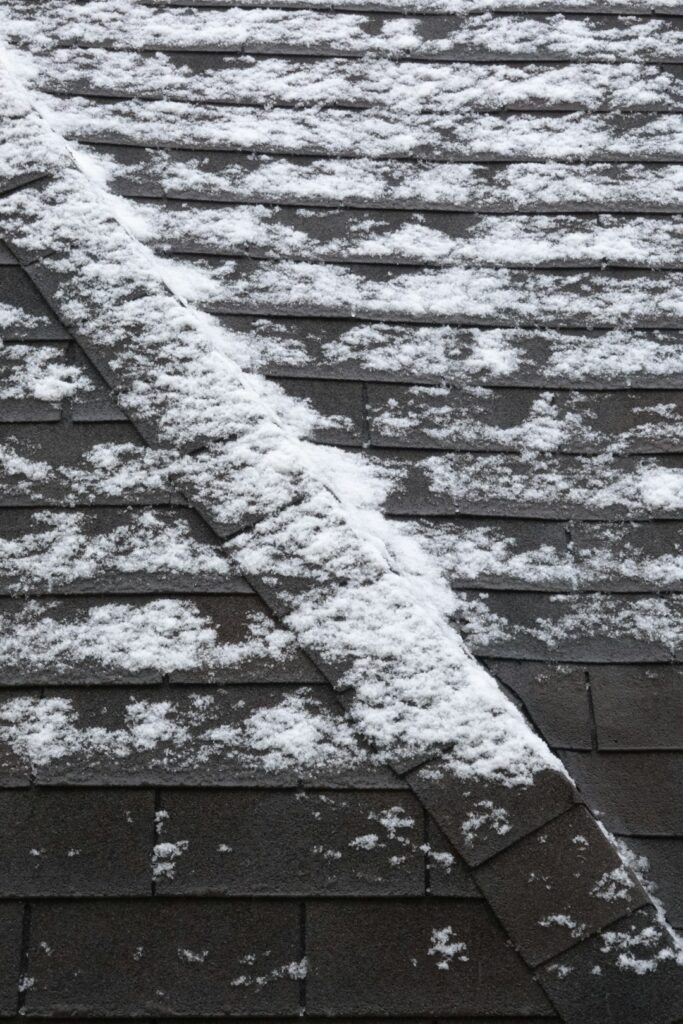
- Snow melting in patches during cold weather
- Ice buildup along eaves and gutters
Air sealing should generally happen before additional insulation is installed. Small openings around attic hatches, plumbing pipes, wiring, recessed lights, chimneys, and ductwork can allow heated air to enter the attic. Adding insulation without addressing those openings may reduce heat transfer but leave moisture and air leakage problems in place.
Insulation also needs to be installed evenly. Thin areas, compressed sections, and gaps around the edges of the attic can create cold spots where condensation is more likely.
How do air sealing and ventilation work together?
Air sealing and ventilation serve different purposes, and both may be needed.
Air sealing limits the movement of heated, moisture-laden indoor air from the living area into the attic. Ventilation moves outdoor air through the attic or roof assembly to help control temperature and moisture.
A typical vented attic may use intake openings near the eaves and exhaust openings higher on the roof. The insulation should not block the intake path. If soffit areas are packed with insulation, outside air may not reach the roof cavity as intended.
Poor ventilation does not always mean that more vents should simply be added. Excessive or poorly placed ventilation can create problems, and roof designs vary. The goal is a balanced system with a sealed ceiling plane, adequate insulation, and a clear ventilation path where the assembly is designed to be vented.
Homes with finished attic rooms, cathedral ceilings, or limited attic access require more careful planning. In those areas, the insulation and air-control layers may be located along the roofline rather than across the attic floor.
Can roof energy efficiency help prevent ice dams?
It can reduce the conditions that contribute to ice dams, but it cannot guarantee that ice dams will never occur.
Ice dams form when snow on a warmer portion of the roof melts and the water refreezes near a colder roof edge. Heat escaping from the home, warm ducts in an attic, inadequate insulation, air leakage, and uneven roof exposure can all contribute.
A more energy-efficient roof assembly helps keep the roof deck closer to outdoor temperatures, which can reduce uneven snow melting. Helpful measures may include:
- Sealing air leaks between the home and attic
- Improving insulation coverage
- Keeping attic ducts from leaking heated air
- Maintaining clear intake and exhaust ventilation paths
- Correcting roof or gutter drainage problems
- Keeping bathroom and kitchen exhaust vents from discharging into the attic

Snow removal from a roof can be hazardous and may damage shingles or other materials if done improperly. Heavy snow loads, active leaks, major ice buildup, or signs of structural stress require prompt attention because safety becomes more important than energy efficiency.
Does a lighter-colored roof save significant energy in this region?
A lighter or more reflective roof can reduce summer heat gain, but the benefit is usually more noticeable in hot, sunny climates than in cold, heating-dominated areas.
In Canton, summer roof temperatures still matter, particularly in homes with low attic insulation, finished upper floors, or rooms beneath a dark roof. However, winter heating performance is often the larger concern. A reflective roof should not be treated as a substitute for adequate insulation, air sealing, or moisture control.
Roof color can also influence snow melting patterns, but the presence of ice dams depends on the entire roof assembly and weather conditions rather than color alone.
What roof details are commonly overlooked?
Skylights, attic hatches, recessed lighting, chimneys, plumbing penetrations, and roof-mounted equipment can interrupt otherwise continuous insulation and air sealing.
Ductwork in an attic is another important factor. Leaky or poorly insulated ducts can release warm air into a cold attic, waste heating energy, and create localized snow melt. Exhaust fans that terminate inside the attic can add substantial moisture, increasing the risk of condensation, mold, and wood deterioration.
Roof penetrations also deserve attention. Flashing problems may first appear as staining or damp insulation, but wet insulation performs poorly and can remain hidden for a long time. A roof that looks acceptable from the ground may still have energy and moisture problems around valleys, penetrations, eaves, or poorly sealed transitions.
What should homeowners check first?
A practical inspection can begin with the attic, provided access is safe and conditions allow it. Look for uneven insulation, visible daylight around penetrations, compressed insulation, wet areas, frost, staining, or blocked ventilation channels.
Inside the home, notice whether upper rooms are unusually cold, ceilings feel drafty, or heating costs rise without a clear change in household use. Outside, look for recurring ice buildup, areas where snow disappears much sooner than elsewhere, sagging gutters, or water stains near roof edges.
Roof energy efficiency is rarely solved by a single product. The most durable results usually come from treating the attic floor or roofline, ventilation, ducts, moisture control, and roof drainage as connected parts of one system.
