
What do mold and mildew look like on a roof?
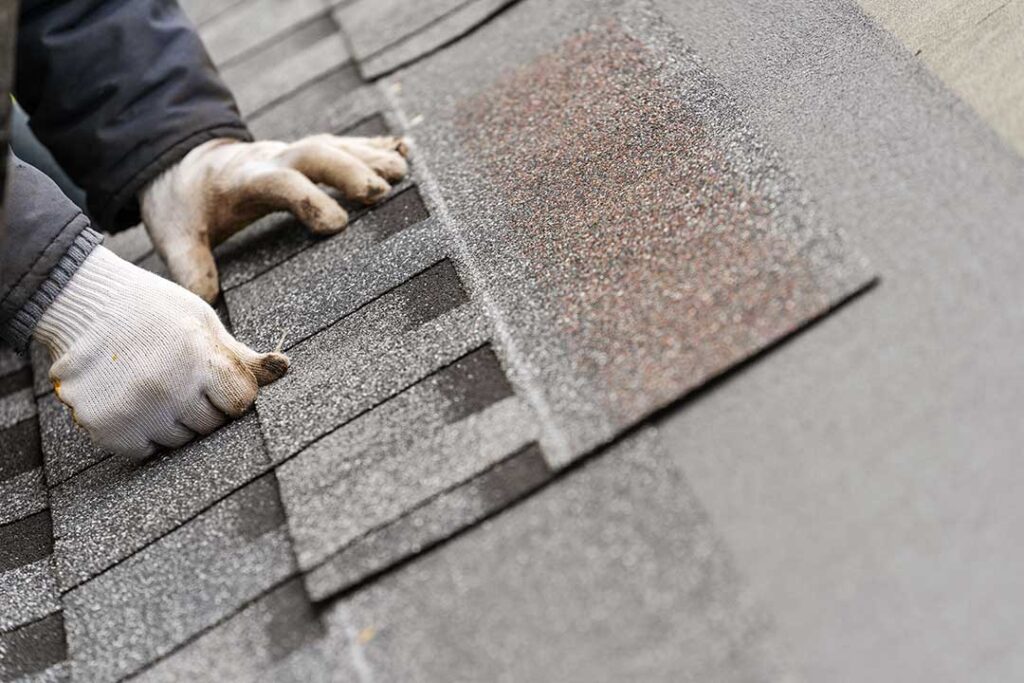
Mold and mildew on a roof usually appear as dark stains, greenish patches, fuzzy growth, or thin films spreading across shingles and nearby roof surfaces. Some discoloration is biological growth, while other marks may be caused by normal weathering, algae, rust, or water staining.
On asphalt shingles, common signs include:
- Black, gray, brown, or green streaks running down the slope
- Irregular patches that become larger over time
- Fuzzy or slightly raised growth on shaded areas
- Green film along roof edges, under tree cover, or near moss
- Discoloration around chimneys, vents, valleys, and gutters
- Persistent dampness or a musty odor near the attic
Mildew is generally a surface-level fungal growth. Mold can also begin on the surface but may spread into damp roofing materials, wood, insulation, or interior finishes when moisture remains trapped.
A roof does not need to look severely damaged for moisture-related growth to be present. Early signs may be limited to a few streaks or patches on the side of the roof that receives less sunlight.
Are black streaks on shingles mold?
Black streaks are often mistaken for mold, but they may be caused by several different conditions. A common cause is roof algae, which can leave dark blue-gray or black discoloration as it spreads across shingles. Mold may develop where algae, moisture, leaves, and organic debris create a damp surface, but the streaks themselves do not prove that mold is present.
The pattern can provide clues:
- Long vertical streaks: Often associated with algae or water runoff carrying surface residue.
- Scattered fuzzy patches: More consistent with mold or mildew growth.
- Green, thick, or cushion-like areas: May indicate moss, especially where moisture and shade are persistent.
- Rust-colored marks: May come from metal flashing, fasteners, or runoff from nearby components.
- Brown rings or sharply defined stains: May indicate water intrusion rather than active surface growth.
Visual identification is not always conclusive. If staining extends into the attic or appears alongside soft decking, peeling paint, damp insulation, or a recurring ceiling mark, the issue should be treated as a possible moisture problem rather than merely a cosmetic stain.
Where does roof mold and mildew usually grow?
Mold and mildew are most likely to appear where a roof stays damp for extended periods. In Canton, seasonal moisture, snow, shaded roof sections, and fallen leaves can create conditions that allow organic growth to persist.
Common locations include:
North-facing or shaded roof slopes
Roof sections that receive limited direct sunlight dry more slowly. Nearby trees, taller structures, and roof features can increase shade and reduce air movement.
Valleys and low-drainage areas
Roof valleys collect water and may also collect leaves, pine needles, and other debris. Blocked or poorly draining areas remain wet longer than exposed shingle surfaces.
Around chimneys, vents, and flashing
Changes in roof height and material can create small areas where water collects. Cracked sealant, damaged flashing, or gaps around penetrations may also allow moisture beneath the roofing system.
Beneath overhanging branches
Branches can drop leaves and needles onto the roof while also limiting sunlight. Physical contact from branches may wear away the protective surface of shingles.
Along gutters and roof edges
Overflowing gutters can keep the lower edge of the roof wet. Water may also splash back onto fascia boards, soffits, siding, or other nearby materials.
How can mold be distinguished from moss and algae?
Mold, mildew, moss, and algae are different forms of biological growth, although more than one may appear in the same area.
Mold may look fuzzy, powdery, or blotchy. It can occur on shingles, wood, insulation, and other damp materials.
Mildew often appears as a thin white, gray, yellow, or light-colored coating. It tends to remain closer to the surface but can still signal persistent moisture.
Algae commonly appears as dark streaks or broad discoloration. It may spread across shingle surfaces without producing a thick, raised layer.
Moss is usually green and visibly three-dimensional. It may grow in clumps, lift shingle edges, and hold water against the roof.
Moss is not the same as mold, but it can contribute to moisture retention. If moss lifts or separates shingles, water may reach the underlayment or roof decking.
Can roof mold cause leaks?
Mold does not usually create a roof leak by itself. Leaks are more commonly caused by damaged shingles, failed flashing, blocked drainage, ice-related damage, deteriorated sealants, or problems around roof penetrations.
However, mold and mildew can indicate conditions that increase leak risk. Persistent dampness may weaken wood components, conceal damaged materials, or develop near an existing leak. Moss can also hold water against shingles and interfere with drainage.
Warning signs that growth may be connected to a roof problem include:
- Water stains on ceilings or upper walls
- Damp insulation in the attic
- Soft, dark, or crumbly roof decking
- Wet rafters or sheathing
- Peeling paint near ceiling edges
- A musty odor that becomes stronger after rain
- Stains that return after interior repairs
A small roof stain should not automatically be treated as proof of a major leak, but recurring moisture deserves attention.
Is roof mold dangerous?
Small amounts of surface growth may not create an immediate health hazard, but disturbing mold can release particles into the air. The greater concern is often the moisture source allowing the growth to continue.
Extra caution is appropriate when:
- Mold is visible inside the attic or living space
- The affected area is extensive
- Anyone in the household has asthma, allergies, or respiratory sensitivity
- Insulation or porous wood is heavily affected
- The roof is steep, wet, icy, or difficult to access
- The growth follows storm damage or a known leak
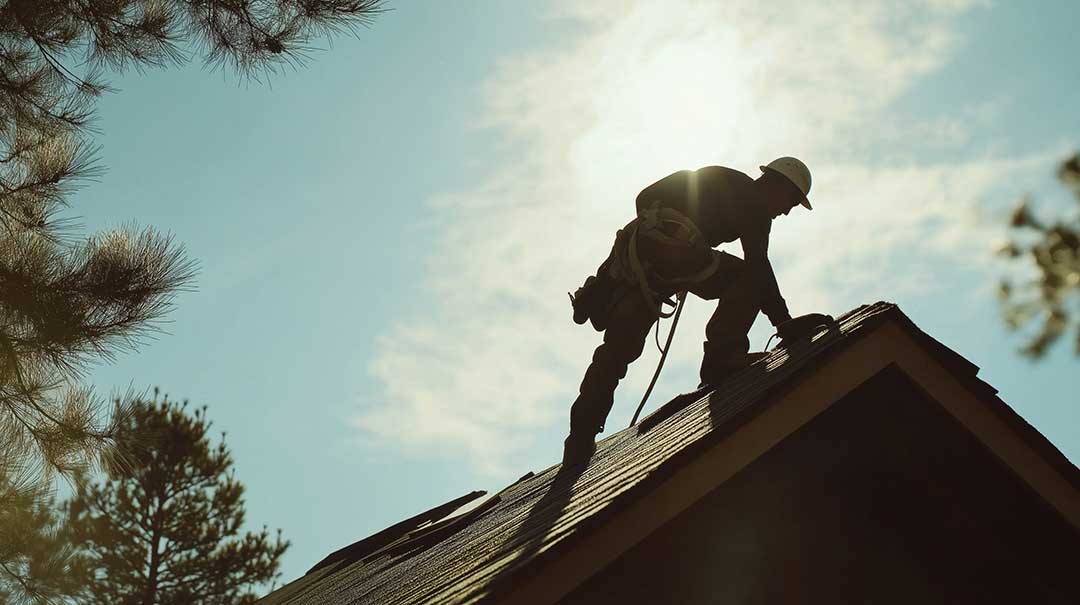
Roof inspections also involve fall hazards. Walking on wet shingles, steep slopes, moss-covered surfaces, or snow-covered areas can cause serious injury. Ground-level observation with binoculars is safer for many homeowners than climbing onto the roof.
What should homeowners check from the ground and attic?
A basic inspection can help determine whether the issue is limited to surface staining or may involve moisture below the roof.
From the ground, look for:
- Expanding dark or green patches
- Missing, curled, cracked, or lifted shingles
- Sagging roof lines
- Debris collecting in valleys
- Gutter overflow or detached sections
- Growth concentrated around roof penetrations
From the attic, use a flashlight to check for:
- Darkened wood
- Damp insulation
- Water marks or drip trails
- Daylight visible through the roof deck
- Condensation on nails or metal surfaces
- Musty odors
- Mold-like growth on rafters or sheathing
Attic condensation can sometimes be mistaken for a roof leak. Poor ventilation, warm air escaping from the living space, and winter temperature differences can produce moisture even when shingles are intact.
Should mold or mildew be cleaned from shingles?
Surface growth should not be aggressively scraped, brushed, or pressure-washed. Abrasive cleaning can remove protective granules, loosen shingles, force water beneath the roofing material, and shorten the roof’s service life.
Household bleach, strong solvents, and improvised chemical mixtures can also damage roofing, landscaping, metal components, or painted surfaces. Runoff may harm plants and enter drainage systems.
If cleaning is necessary, the method should match the roofing material, the type of growth, and the condition of the shingles. Any approach should avoid foot traffic on fragile or wet roofing and should address the moisture conditions that allowed the growth to develop.
The most useful long-term steps are often preventative:
- Keep gutters and downspouts clear.
- Remove accumulated leaves and branches safely.
- Trim vegetation that keeps the roof shaded or restricts airflow.
- Maintain attic ventilation and air sealing.
- Inspect flashing and roof penetrations after severe weather.
- Watch for recurring stains inside the attic or living areas.
- Avoid storing damp materials against attic wood or insulation.
In a cold, snowy climate, roof growth may become more noticeable after spring thaw, when shaded areas remain damp and winter debris begins to break down. Regular observation from the ground can help identify changes before moisture affects interior materials.
